





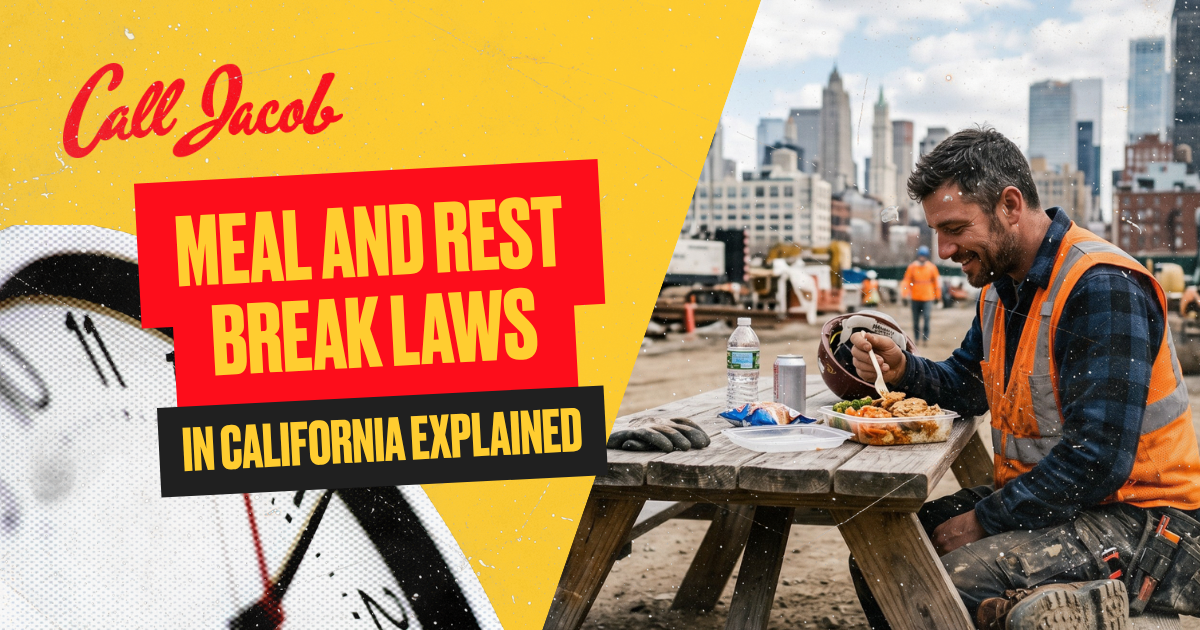
With long hours and demanding environments, having meal and rest breaks is a necessity for getting through the workday. In California, employers are legally required to provide employees with unpaid 30-minute meal breaks and paid 10-minute rest breaks, depending on the length of the employee’s shift. If your employer fails to provide these breaks, interrupts them, or pressures you to skip them, you can pursue compensation and legal action.
Below, we’ll break down California lunch break laws, explain the types of breaks employees are entitled to, and explore your legal options if your rights have been violated.
Meal Break Laws
In California, employers are required to provide unpaid, duty-free meal breaks for non-exempt employees who work more than five hours in a shift. The first 30-minute meal break must be provided before the end of the fifth hour, with a second 30-minute break required if the shift exceeds 10 hours.
During this meal break, employees must be free from all duties and allowed to leave their place of work. If they’re required to stay on-site or remain on-call, the meal break may need to be paid and counted as hours worked during their shift. Employers also can’t discourage employees from taking their breaks, delay them until the very end of their shift, or pressure workers to skip them because of staffing shortages or heavy workloads.
Meal breaks can be waived under limited circumstances if the employer and the employee enter into a mutual written agreement. Employees who work more than 10 hours have the right to waive their second meal break, provided their first meal break has been taken, and their total shift doesn’t exceed 12 hours.
If the employer doesn’t provide a full, 30-minute, uninterrupted meal break, California law requires them to pay the employee an additional hour of pay at their regular rate for each workday the violation occurs.
Rest Break Rules
In addition to meal breaks, employees in California are entitled to a paid, uninterrupted 10-minute rest break for every four hours worked. Employees who work more than four hours are entitled to an additional rest break every four hours.
Rest breaks should ideally be taken in the middle of each shift, during which employees must be relieved of all duties. These breaks are separate from meal breaks and shouldn’t be combined, skipped, or added onto meal periods to shorten the workday. During this time, employers can’t require employees to remain on-call, monitor equipment, answer phones, or continue performing any tasks. Employees are also not required to stay on-site during rest breaks, and the employer cannot prevent them from leaving.
If an employer doesn’t provide a compliant rest break for non-exempt employees, they must pay a penalty of one hour of pay at the employee’s regular rate.
Employer Violations
If an employer violates California meal and rest break laws, they can be held financially liable for missed or noncompliant breaks. Common violations include:
- Failing to provide off-duty breaks: Requiring employees to remain on-call, stay at their workstation, or complete tasks during their scheduled meal or rest breaks.
- Illegal deductions for skipped lunches: Automatically deducting 30 minutes from an employee’s pay, even when a meal break wasn’t actually provided.
- Forcing employees to continue working: Calling employees back to work, monitoring their tasks, or preventing them from taking a full, uninterrupted break.
- Pressuring employees to skip breaks: Creating unrealistic workloads, understaffing shifts, or discouraging employees from taking breaks to keep up with their job demands.
- Providing late or shortened breaks: Not allowing employees to take their full 30 or 10-minute breaks and cutting them short to keep up with workloads.
- Not keeping accurate records: Failing to document meal periods, rest breaks, and pay for missed meal breaks in California.
For each workday on which an employer doesn’t provide a compliant meal or rest break, California law requires the employer to pay the employee an additional hour at their regular rate. If an employer repeatedly violates California lunch break laws, employees may also pursue wage claims, penalties, and interest, and may even file lawsuits.
Legal Options
If your employer doesn’t follow meal or rest break laws in California, you have legal options. Depending on your situation, you can file a wage claim with the California Labor Commissioner’s Office or pursue a private lawsuit against your employer for repeated meal break violations.
To begin building your case, start by gathering evidence as soon as possible. Keep a record of every missed, shortened, or interrupted break, and list the date, time, and reason the break was denied or cut short. Saving timecards, schedules, pay stubs, and emails related to the violation can also help strengthen your case. If your coworkers are experiencing the same issue, gather witness statements to help support your claim and show the pattern of ongoing violations.
Making a formal complaint to your manager or HR department about the violation helps create a paper trail of the problem. If they don’t address the issue and provide you with your entitled pay, you can then file a claim with the California Labor Commissioner’s Office. Under California law, employees who report employer wage-and-hour violations are protected against retaliation, including wrongful termination, reduced hours, demotions, and other forms of punishment.
Hiring an experienced employment attorney can help strengthen your case and guide you through the legal process. They can assist you with gathering evidence, filing claims, and negotiating with your employer. Your wage-and-hour attorney can also guide you through the process of filing a lawsuit to recover unpaid wages, break premiums, interest, attorney fees, and other penalties. In some cases, you may even be able to join or pursue a class action lawsuit if other employees are also affected by the same unlawful practices.
Contact the Law Offices of Jacob Emrani Today
Is your employer failing to provide the meal or rest breaks you’re entitled to? Contact the Law Offices of Jacob Emrani today for a no-cost case evaluation. Our skilled employment attorneys will review your case, explain your legal options, and help you pursue the compensation you’re owed.
Whether your employer denied breaks, didn’t provide premium pay, or retaliated against you after you reported California labor law breaks, our team can help. We’re here to guide you through the entire process, assisting with everything from gathering evidence to representing you in court. With our experienced attorneys by your side, you can trust that you have a team ready to fight for your rights and pursue the compensation you deserve.