


California Dog-on-Dog Attack Claims
December 20, 2023
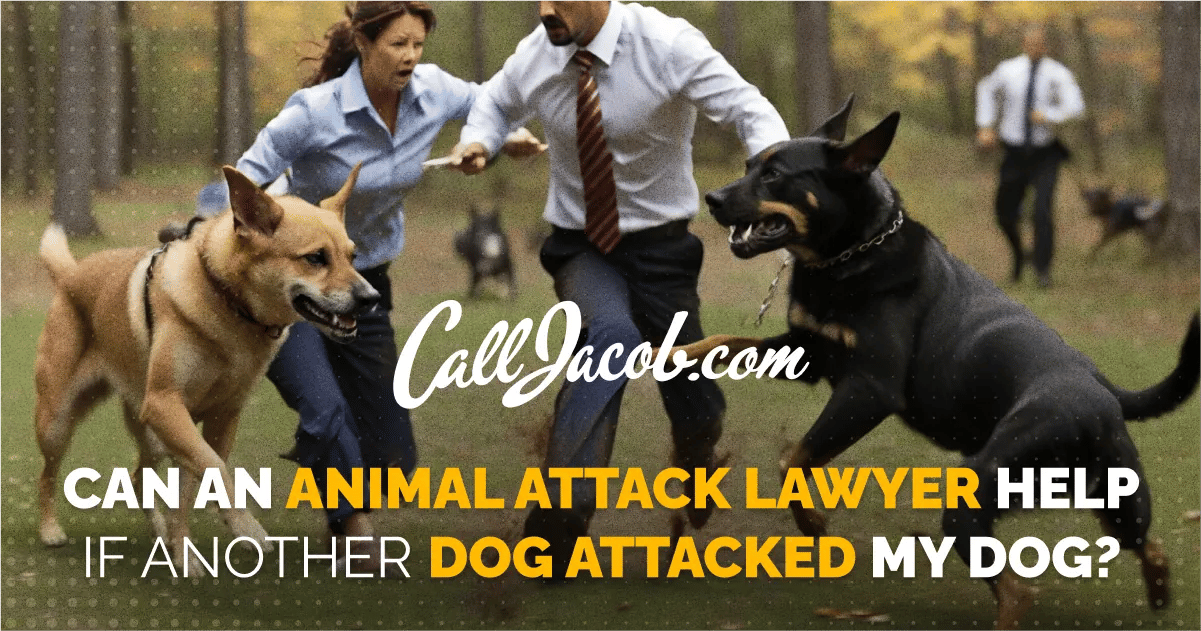
When your dog is attacked, it’s not just upsetting—it can be expensive, time-consuming, and confusing. Many owners quickly learn that veterinary bills, follow-up care, and even behavioral issues can last long after the bite wounds heal. If the attacking dog’s owner refuses to pay, minimizes what happened, or points the finger back at you, it may be time to consider whether an animal attack lawyer can help.
Below is a decision-focused guide for California dog-on-dog attacks: when a lawyer can add the most value, what facts typically matter, what “counts” as damages, and what to do to protect both your pet and your legal position.
Quick decision factors: when legal help is most likely to matter
- Serious vet costs or ongoing care: Emergency treatment, surgery, infection management, rehab, or follow-up appointments add up quickly.
- Disputed fault: The other owner claims your dog “started it,” was off-leash, or you “assumed the risk.”
- Attack happened in a public place: Sidewalks, parks, apartment common areas, or near a business often create clearer rules and more witnesses/cameras.
- History of aggression: Prior incidents, warnings, bites, or complaints can change the leverage in a claim.
- Loose dog / leash law issues: Animal control citations, leash ordinance violations, or off-leash roaming can be powerful evidence.
- Owner won’t share insurance information: Many claims are paid through homeowners insurance, renters insurance, or sometimes a liability policy—if you can identify coverage.
- Multiple parties may be responsible: A dog sitter, walker, landlord, property manager, or event organizer may have contributed to unsafe conditions.
- You (or someone else) was injured breaking up the fight: Human injuries can trigger different claims and higher stakes.
What an “animal attack lawyer” can do in a dog-on-dog attack case
In California, dog-on-dog incidents often become a dispute about responsibility, proof, and what costs are recoverable. Legal help typically focuses on:
- Identifying all responsible parties: The dog owner is often the primary target, but a handler (dog walker), sitter, or property owner may also be involved depending on the facts.
- Preserving evidence: Surveillance footage, witness names, veterinary records, photos taken the same day, and animal control reports can disappear quickly.
- Handling insurance communications: Insurers may seek recorded statements or try to categorize the event as a “mutual dog fight.” Representation can help reduce missteps.
- Proving damages: A claim is only as strong as its documentation (invoices, treatment plans, rehab notes, prognosis, and related expenses).
- Negotiating reimbursement: Even when liability seems clear, payment disputes are common (full vs. partial reimbursement, reasonableness of treatment, future care).
- Filing a lawsuit if necessary: When informal resolution fails, a lawsuit can compel evidence production and create settlement pressure.
Do you have a viable claim in California? Key requirements and what changes the outcome
California has a well-known “strict liability” rule for dog bites to people in many situations, but dog-on-dog attacks do not automatically follow the same strict-liability framework. These cases frequently rely on negligence and local leash laws, plus evidence that the other owner failed to use reasonable care.
Facts that commonly support liability
- The attacking dog was off-leash where leashes are required (parks, sidewalks, apartment common areas, etc.).
- The owner/handler lost control of the dog (dropped leash, inadequate collar/harness, allowed the dog to approach).
- Prior notice of dangerous behavior (known aggression, prior incidents, prior animal control involvement).
- The attack was unprovoked during a normal walk or routine public interaction.
- Failure to secure property (gate left open, broken fence, dog escaped and attacked).
Factors that can weaken or complicate a claim
- Shared fault allegations: Your dog was off-leash, you entered a posted off-leash area, or you ignored warnings.
- Conflicting accounts with no witnesses: “He said/she said” disputes can reduce leverage unless documentation is strong.
- Mutual confrontation cues: Two dogs charging each other, both owners allowing tension to build, or both dogs biting can muddy causation and damages.
- Assumption of risk issues: Certain settings (some dog parks) can create arguments that owners accept certain risks—facts matter.
- Minimal documentation: Delayed vet care or no photos can make injuries look less serious than they were.
Decision checklist table: Does it make sense to talk to a lawyer?
Question to ask
Why it matters
What to do next
Are the veterinary bills substantial or likely to grow?
Higher costs increase the importance of proving damages and future care.
Collect invoices, treatment notes, prescriptions, and the vet’s recommended care plan.
Is the other owner denying responsibility or blaming your dog?
Disputed liability often requires evidence, witness statements, and a clear narrative.
Write down your timeline, secure witness contacts, and request any video nearby.
Did the attack involve a leash law or local ordinance violation?
Ordinance violations can support negligence arguments.
Request animal control records and document the location and conditions.
Was the attacking dog loose, escaped a yard, or in a common area?
Shows potential failure to secure or control the dog; may involve landlords or property managers.
Photograph gates/fences, note addresses, and preserve any building/security communications.
Were you or someone else injured while stopping the attack?
Human injury claims may involve different rules, damages, and insurance considerations.
Get medical evaluation, document wounds, and keep all medical records and receipts.
Is there evidence the dog has attacked before?
Prior incidents can increase accountability and settlement leverage.
Ask animal control about prior reports; save any neighbor messages or warnings.
Is insurance involved (homeowners/renters), or is the owner refusing to pay?
Coverage often determines whether recovery is practical.
Request insurance details in writing and avoid signing releases without review.
If/Then: a fast way to decide your next move
If your dog needed emergency care, stitches, drains, surgery, or has a risk of infection, scarring, or ongoing complications, then prioritize thorough documentation and consider legal guidance early—before videos disappear and stories change.
If the attacking dog was off-leash (or escaped) and the owner is dodging responsibility, then a claim may be stronger than you think, especially with animal control involvement and witness support.
If both dogs were off-leash, or the incident happened at a dog park with limited proof, then outcomes may depend heavily on specific behavior, witness accounts, and whether any rules were violated.
If you were bitten while separating the dogs, then you may have a separate personal injury claim—do not treat it as “just a pet issue.”
What to do after another dog attacks your dog (and why it affects your claim)
Even though this is a decision guide, these steps directly affect whether reimbursement is realistic and how smoothly the process goes.
1) Get veterinary care immediately and follow the treatment plan
Prompt care protects your pet and creates a clear medical record connecting the injuries to the attack. Deep puncture wounds can look small but become serious due to infection or tissue damage beneath the skin.
2) Document everything the same day if possible
- Photos/video of injuries before cleaning (if safe), during treatment (as permitted), and during healing
- Location photos: leash signs, broken fence, open gate, blood on pavement, torn harness
- Your dog’s collar/leash/harness condition
- Time, exact location, and a written timeline while details are fresh
3) Identify the other dog and the legal owner/handler
Get the person’s name, phone, address, and the dog’s vaccination status (especially rabies vaccination). If the person claims they’re a walker or sitter, note the company or the actual owner’s identity.
4) Report when appropriate: animal control, building management, or park officials
An animal control report can document the event, capture witness names, and create an official record. In apartment or HOA settings, notifying management can also help track prior complaints and preserve security footage.
5) Watch how you communicate (texts and social messages matter)
It’s common to try to keep things friendly. Still, avoid statements that can be interpreted as accepting blame (for example, “Maybe my dog provoked yours” or “It was probably both dogs”). Stick to facts: time, place, what you observed, and the vet’s findings.
Who may be responsible besides the other dog’s owner?
Dog-on-dog attacks don’t always involve only two owners on a sidewalk. In some cases, additional parties may share responsibility:
- Dog walker or pet sitter: The person handling the dog may have failed to control it or violated leash requirements.
- Landlord or property manager: Sometimes implicated if they permitted a known dangerous dog to remain on the property or failed to fix a broken gate or fence in common areas. These cases are very fact-specific.
- HOA or apartment management: May be relevant if there were repeated complaints and the attack occurred in shared spaces with rules that weren’t enforced.
- Event organizers: In rare scenarios—like an adoption event or crowded pet-friendly gathering—poor crowd control or rule enforcement can contribute to foreseeable risks.
What can you recover for a dog-on-dog attack in California?
Many people assume the only possible reimbursement is the initial emergency vet visit. In reality, damages can include several categories depending on the situation and proof available.
Veterinary bills (past and reasonably necessary future care)
This can include emergency care, diagnostics, wound management, surgery, medications, follow-up visits, physical therapy/rehab, and treatment of complications like infection or reopened wounds.
Related out-of-pocket costs
- Prescriptions filled at pharmacies
- Medical supplies (cones, bandages, wound care materials)
- Special diets recommended during recovery
- Transportation costs tied to treatment (documented)
Property damage
Leashes, harnesses, carriers, clothing, or other personal items damaged during the attack may be part of a claim if documented.
Loss of use and long-term effects
Some dogs experience lasting behavioral changes—fear reactivity, anxiety on walks, or aggression after being attacked. Whether and how that becomes part of a claim can be complex, but documentation from your veterinarian or a qualified trainer/behaviorist can be important if future treatment is recommended.
When a person is injured during the incident
If you were bitten, knocked down, or otherwise injured while breaking up the fight, you may also have a personal injury claim. That can involve medical bills, lost wages, and pain and suffering. These are separate from (though related to) the harm to your dog.
Common insurance and liability arguments you should expect
Even when an attack seems straightforward, insurers (and sometimes owners paying out-of-pocket) may push back. Common themes include:
- “It was a mutual dog fight.” They may argue both dogs were equally involved to reduce or deny reimbursement.
- “Your dog wasn’t leashed either.” Comparative fault arguments can reduce recovery if your conduct contributed.
- “The treatment was excessive.” They may challenge the reasonableness of the vet’s plan or question future care.
- “No proof my dog caused those injuries.” This comes up when there’s delayed treatment, minimal photos, or pre-existing conditions.
- Coverage disputes: Some policies have exclusions involving animals, certain breeds, or business activities like paid dog walking. Coverage analysis can matter.
Example scenario (hypothetical)
Hypothetical: You’re walking your leashed small dog in your Los Angeles neighborhood. A larger dog runs out of an open gate and bites your dog’s neck and shoulder. You go to an emergency veterinarian the same evening; your dog needs sedation, wound flushing, antibiotics, and follow-up visits. You also have photos of the open gate, torn harness straps, and two neighbors who saw the dog charge from the property.
The other owner later texts that your dog “must have scared” their dog and offers to pay “a little,” but refuses to cover the emergency bill and says you should have “walked on the other side.”
How this could play out: Documentation of the gate condition, witness statements, prompt veterinary records, and any animal control report help build a strong negligence narrative (failure to secure the dog). Insurance may be located through homeowners or renters coverage. If the dispute continues, a formal demand and, if needed, a lawsuit could be used to pursue reimbursement.
Situations that often surprise dog owners
“My dog wasn’t bitten, but got injured.”
Dogs can be hurt while fleeing, being yanked by a leash, or getting tangled during an attack. Vet documentation tying the injury to the incident matters.
“The attacker was a friend’s or neighbor’s dog.”
These are emotionally difficult. Insurance coverage (not personal savings) may be available, but you still need to identify the policy and document the claim carefully.
“It happened in an apartment complex common area.”
Common areas often have rules about leashes and known problem animals. Reporting to management and preserving camera footage quickly can be critical.
“It happened at a dog park.”
Dog parks can be complicated, especially if both dogs were off-leash and there are few rules beyond posted guidelines. Witnesses, video, and prior aggression history can become decisive.
What not to do (pitfalls that can reduce recovery)
- Don’t delay veterinary care hoping the wound “will be fine.” It risks your dog’s health and weakens the timeline of proof.
- Don’t rely on verbal promises of repayment. Confirm details in writing and keep all receipts.
- Don’t sign a release just to receive partial payment if future complications are possible.
- Don’t escalate the situation with threats or social media accusations; it can backfire and complicate resolution.
- Don’t throw away damaged gear (leash, collar, harness). Store it as evidence.
Timing: how long do you have to take action in California?
Deadlines (statutes of limitations) depend on the type of claim and specific facts. Dog-on-dog attacks may involve property damage concepts, negligence, and potentially personal injury if a human was hurt. Because deadlines and notice requirements can vary, it’s smart to get case-specific guidance early—especially if you’re dealing with an insurer, an uncooperative owner, or a situation involving a landlord or business.
When talking to a lawyer is usually worth it
Consider a consultation if any of the following are true:
- Your dog required emergency care, surgery, or has a complicated recovery
- You’re facing significant bills and the other party is stalling
- The other side is blaming you, your dog, or claiming “no proof”
- You suspect an insurance policy exists but can’t get the information
- There’s video, witnesses, or prior incident history that needs to be preserved
- Someone sustained a bite or other injury while intervening
How to prepare for an initial consultation
Having the right information ready can make the conversation more productive:
- Your timeline of events (who, what, when, where)
- Photos/videos of injuries and the scene
- Veterinary invoices and medical notes (including prognosis and follow-up plan)
- Texts/emails with the other owner/handler (especially admissions or refusals)
- Witness names/contact info
- Animal control report number, if any
- If you were injured: medical records, photos of your injuries, and time missed from work
Talk to Jacob Emrani’s team about a dog attack dispute
If another dog attacked your dog and you’re stuck with the bills—or the other owner is disputing fault—getting clear information early can help you understand your options. You can reach Jacob Emrani through CallJacob.com to discuss what happened and whether a claim may make sense based on the facts and available evidence. No outcomes can be promised, but a focused review can help you avoid costly mistakes.
Disclaimer: This article provides general educational information in a California context and is not legal advice. Laws and deadlines can vary by location and specific facts. For advice about your situation, consult a qualified attorney.