


California Dog Bite Liability
June 9, 2020
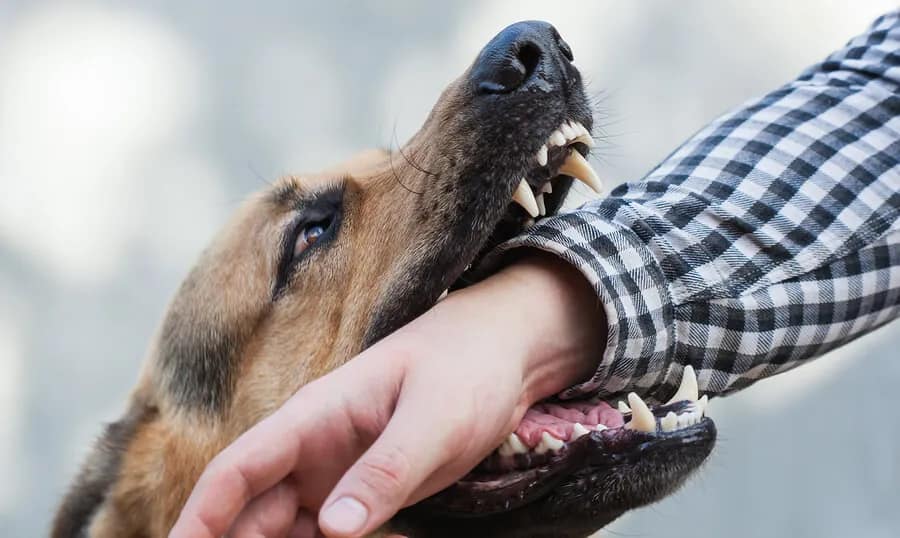
Dog bites can cause serious injuries and a lot of confusion about who pays for medical bills, lost income, and scarring. California has a well-known rule that often makes the dog’s owner responsible—but real cases still turn on details like where the bite happened, what the dog was doing, and whether any legal exceptions apply.
Use this guide if you’re trying to figure out whether California’s dog bite liability law applies to your situation.
Quick decision factors (fast way to size up a California dog bite claim)
- Was it a “bite” (not just a scratch or knockdown)? California’s strict dog bite rule is bite-focused, though other laws may cover non-bite injuries.
- Were you in a public place or lawfully on private property? Trespassing can change everything.
- Can you identify the dog’s owner? Owner liability is the core of the statute.
- Were you performing a police or military duty? Special rules may apply to K-9 bites and official duties.
- Did you provoke the dog or ignore warnings? Comparative fault can reduce recovery even under “strict liability.”
- Was the dog being handled by someone else (walker, sitter, landlord scenario)? Non-owners may share liability under negligence theories.
- Do you have medical documentation and clear photos? Early records often determine whether insurance takes the claim seriously.
- Was there a prior bite history or known dangerous behavior? Not required for strict liability, but it can affect other legal theories and insurance evaluation.
The core rule: California’s “strict liability” for dog bites
California generally follows a “strict liability” approach for dog bites. In practical terms, this means the dog’s owner can be financially responsible when:
- The dog bites a person, and
- The person is in a public place or lawfully on private property.
Unlike states that follow a “one-bite rule,” California typically does not require proof that the owner knew the dog was dangerous. The bite itself—plus the location/legal presence requirement—often triggers responsibility.
Key term: “Strict liability” does not mean “automatic full payment”
Even if the owner is legally responsible, insurance companies may still argue about:
- Whether the injury was actually a bite (vs. a fall, scratch, or collision)
- Whether you were lawfully on the property
- Comparative negligence (your actions contributed to the incident)
- Causation and damages (how severe, what treatment was necessary, whether symptoms were pre-existing)
When you’re “lawfully” on private property (and why it matters)
A major requirement is that the person bitten must be lawfully on private property. Common examples include:
- Guests invited to a home or apartment
- Delivery drivers and service providers doing their jobs
- Neighbors who enter a yard for a legitimate reason (depending on circumstances)
- Tenants and people lawfully visiting tenants
By contrast, a person who is trespassing or entering without permission may not meet this requirement—and the case may shift to different legal theories (or fail entirely), depending on the facts.
Exceptions and limitations that can change the outcome
1) Police and military K-9 situations
Dog bites involving police dogs or military dogs can involve special rules. Whether the “strict liability” bite statute applies may depend on what the dog was doing, whether the person was suspected of a crime, and whether the handler was acting in the course of official duties. These cases often turn on fact-specific questions and government liability considerations.
2) You weren’t lawfully on the property
If the defense can show you were trespassing or otherwise not lawfully present, strict-liability bite rules may not apply.
3) Comparative fault (you can still be partly blamed)
California generally applies comparative negligence. That means if your actions contributed to the bite—such as ignoring a warning sign, entering a restricted area, or roughly handling the animal—any recovery may be reduced by your percentage of fault.
4) The injury wasn’t from a bite
California’s strict liability dog bite statute focuses on bites. If a dog knocks someone down, causes a bicycle crash, or scratches someone, liability may still exist—but the legal theory often shifts to negligence (failure to control the dog, leash law violations, known dangerous tendencies, etc.).
5) Assumption of risk (certain work-related contexts)
In some situations—especially for certain professionals—defendants may argue “assumption of risk.” The idea is that some jobs inherently involve animal contact and known hazards. How this applies depends on the role and the specific facts. (This is one reason documentation of the circumstances and safety steps matters.)
Decision checklist: Which legal path is most likely?
Question
Why it matters
What it often points to
Did the dog’s teeth make contact and break skin (or clearly bite)?
California’s strict liability rule is bite-centered.
Owner strict liability is more likely.
Were you in public or lawfully on private property?
Legal presence is a core requirement.
Strict liability more likely if “yes.”
Can the dog’s owner be identified?
Owner responsibility is central under the statute.
If unclear, investigation becomes critical; other parties may be explored.
Did the dog knock you down or cause injury without biting?
Non-bite injuries may require negligence proof.
Negligence claim (leash control, supervision, property conditions) may be needed.
Were there warning signs, a closed gate, or instructions you ignored?
Comparative fault can reduce damages.
Expect a partial-fault argument by insurance.
Was this a police/military dog during official work?
Special rules and defenses may apply.
More complex liability analysis; strict liability may not apply the same way.
Is there prompt medical documentation and clear injury photos?
Proves causation, severity, and timeline; helps counter “minor injury” claims.
Stronger negotiating position with homeowners/renters insurance.
If/Then guidance (how small facts change liability)
- If you were bitten on a sidewalk, in a park, or in a shared building area, then California strict liability usually points toward the owner being responsible.
- If you were invited inside a home and bitten, then strict liability often applies even if it’s the dog’s first incident.
- If you entered a fenced backyard without permission and were bitten, then the defense may argue you were not lawfully on the property.
- If the dog did not bite but caused you to fall (for example, lunging on a leash), then you may need a negligence-based approach (leash handling, control, prior behavior).
- If a child is bitten, then liability may still be strict, but defenses may focus on supervision and the exact circumstances (without assuming the child is “at fault”).
Who can be responsible besides the dog’s owner?
California’s dog bite statute focuses on the owner, but real-life incidents often involve other potentially responsible people or entities. Depending on the facts, a claim may also involve:
- Dog walkers and sitters (negligent handling, ignoring leash rules, failure to control the animal)
- Property owners/landlords (in limited situations, often involving knowledge of a dangerous dog and failure to address foreseeable risk)
- Businesses (e.g., a store allowing an aggressive dog inside; a grooming facility; a boarding facility—typically analyzed under negligence and premises liability concepts)
- Parents/guardians of a minor owner (fact-dependent)
The “who” question matters because it affects insurance coverage—for example, homeowners insurance, renters insurance, or a commercial general liability policy.
Evidence that tends to matter most in California dog bite cases
Because strict liability can simplify the “who’s at fault” part, the biggest disputes often shift to proof of what happened and proof of damages. Helpful evidence commonly includes:
- Medical records from the first visit (urgent care, ER, primary care), including notes describing a bite wound, laceration, puncture, infection, or rabies/tetanus precautions
- Photographs of the injury from day one and as it heals (including bruising, swelling, scarring)
- Witness information (names, phone numbers) and short written accounts while memories are fresh
- Animal control reports and quarantine documentation if applicable
- Proof of location (where you were standing, whether there was a gate, whether it was a public area)
- Owner identification (name, address, phone, proof the dog belongs to them)
- Employment records showing missed work, reduced hours, or job restrictions
- Receipts and bills (medications, wound care, follow-up visits)
Insurance issues: what commonly gets argued
Most dog bite claims are handled through an insurance policy—often homeowners or renters insurance. Even when liability seems straightforward, insurers may still push back on:
- Injury severity: “It was a small bite,” “no stitches,” “it healed quickly.”
- Causation: “The infection/scar wasn’t from the bite,” “you delayed treatment.”
- Comparative negligence: “You approached the dog,” “you ignored warnings,” “you put your hand near its face.”
- Location/legal status: “You weren’t allowed there,” “you opened a closed gate.”
- Coverage questions: whether the policy was active, whether the incident happened at the insured location, and whether any exclusions apply.
To keep the focus on the facts, it helps to preserve a clean timeline: when the bite happened, when medical treatment occurred, and what symptoms appeared (pain, swelling, numbness, limited motion, infection signs, anxiety around dogs).
Compensation categories that may apply after a dog bite
Dog bite injuries can range from superficial punctures to deep tissue damage. Depending on the situation, a claim may seek compensation for:
- Medical expenses (ER/urgent care, stitches, antibiotics, follow-up care, specialist visits)
- Future medical care (scar revision, plastic surgery consultation, physical therapy, nerve treatment)
- Lost wages and reduced earning capacity (time off, restricted duties)
- Pain and suffering (physical pain, sleep disruption, ongoing sensitivity)
- Emotional distress (anxiety around dogs, trauma symptoms)
- Scarring and disfigurement (especially for bites to the face, arms, hands, or legs)
Valuation is typically driven by the medical narrative and the lasting impact: infection complications, functional limitations (hand bites are often serious), and permanent scarring.
Example scenarios (hypothetical)
Hypothetical 1: Bite during a delivery
Facts (hypothetical): A delivery driver walks up a front path to drop a package. The homeowner opens the door and the dog rushes out, biting the driver’s calf. The driver receives medical treatment the same day, and animal control documents the incident.
Likely liability analysis: The driver is lawfully on private property for work. Because it’s a bite, California’s strict liability rule would commonly point to owner responsibility, with the main disputes likely centered on damages and documentation rather than “first bite” history.
Hypothetical 2: No bite—knockdown at a park
Facts (hypothetical): A large dog on a long leash lunges toward another dog and knocks over a passerby, causing a wrist fracture. No bite occurs.
Likely liability analysis: Strict dog bite liability may not apply because there was no bite. A negligence theory may be more relevant: leash control, failure to restrain, and foreseeable risk in a crowded area. Evidence might focus on witness accounts, leash handling, and medical documentation of the fall injury.
Hypothetical 3: Bite after entering a gated yard
Facts (hypothetical): A person opens a closed side gate to retrieve a ball that rolled into a neighbor’s yard. The neighbor’s dog bites the person’s hand.
Likely liability analysis: The defense may argue the person was not lawfully on the property, which can limit strict liability under the dog bite statute. The outcome would depend on facts like permission, prior neighbor practices, warnings, and whether entry could be considered implied consent.
What to do after a dog bite in California (practical, case-shaping steps)
- Get medical care promptly and follow discharge instructions. Bites can lead to infection and complications that are harder to explain if treatment is delayed.
- Photograph injuries immediately and over time, including bandaging, swelling, bruising, and healing stages.
- Identify the owner and dog: name, address, phone number, and any available vaccination information.
- Report the bite to local animal control or the appropriate public agency when appropriate; official documentation can help verify the event.
- Preserve what you were wearing if it’s torn or bloodied (bag it; don’t wash).
- Write down what happened while it’s fresh: where you were standing, what the dog did, whether there were warnings, and who saw it.
- Be careful with recorded statements to insurance adjusters. Incorrect phrasing can be used to argue comparative negligence or minimize injuries.
Mistakes that commonly weaken dog bite claims
- Waiting too long for treatment (gaps create room for “not serious” or “not caused by bite” arguments).
- Not documenting the scene (no photos of the area, gate, signage, leash, or where it occurred).
- Assuming the bite statute covers every dog-related injury (non-bite injuries may require a different theory).
- Posting about the incident online in a way that can be misconstrued (jokes, minimization, or contradictory details).
- Throwing away evidence like torn clothing or failing to get witness contacts.
How timing can affect a California dog bite case
Timing matters in three main ways:
- Legal deadlines (statutes of limitations): California has filing deadlines that can vary based on facts (including whether a public entity is involved). Missing a deadline can end a case regardless of merit.
- Medical timeline: Early records often become the foundation for proving the injury was caused by the bite and documenting complications like infection, nerve symptoms, or functional limitations.
- Investigation timeline: Witness memories fade, video footage can be overwritten, and animal control records are easier to obtain promptly.
When the “dog owner” isn’t obvious
Sometimes the bite happens at a family gathering, a shared household, or with a dog that is “owned” by one person but cared for by another. Ownership can involve factors like who keeps the dog, who pays for it, and who controls it day-to-day.
When it’s unclear, the practical approach is to gather identifiers early: the address where the dog lives, who was controlling the dog at the time, any microchip or license information, and any communications acknowledging ownership or responsibility.
FAQ
Does California’s “one-bite rule” apply?
Answer: Generally, no—California is known for strict liability for dog bites. The owner can be responsible even if the dog never bit anyone before, assuming the legal requirements are met.
What if the bite happened inside the owner’s home?
Answer: A bite inside a home can still trigger strict liability if you were lawfully there. Examples include being an invited guest or entering for work like repairs or deliveries.
What if the dog didn’t bite but I was injured?
Answer: You may still have a claim, but it may not be under strict “dog bite” liability. Many non-bite incidents are pursued under negligence theories (leash control, supervision, foreseeable risk).
Can I recover if I approached or petted the dog?
Answer: Possibly, but the defense may argue comparative fault. California can reduce compensation based on your share of responsibility depending on the circumstances.
Do I have to report the bite to animal control?
Answer: Not every situation is identical, but reporting often helps create a neutral record and can document quarantine/vaccination issues. It can also help confirm the dog’s identity.
Does homeowners or renters insurance cover dog bites?
Answer: Often it can, but coverage depends on the specific policy and facts. Insurers may dispute coverage, liability details, or the value of injuries.
What if a child is bitten?
Answer: Strict liability can still apply. The case may focus on documentation, the child’s medical care, scar management, and any long-term effects.
What if the dog owner says it was my fault?
Answer: Expect that argument in many cases. Your photos, medical records, witness accounts, and clear notes about the circumstances can be crucial in assessing comparative fault.
Talk to a California dog bite injury lawyer
If you were bitten by a dog in California and you’re trying to understand how strict liability works, what exceptions may apply, or how insurance might respond, you can contact Jacob Emrani at CallJacob.com to discuss the situation and learn what information typically matters in a dog bite claim. No outcome can be promised, but a focused review can help you understand realistic next steps.
Disclaimer: This article provides general educational information about California dog bite liability and related issues. It is not legal advice and does not create an attorney-client relationship. Laws and outcomes depend on specific facts; consult a qualified lawyer for advice about your situation.