





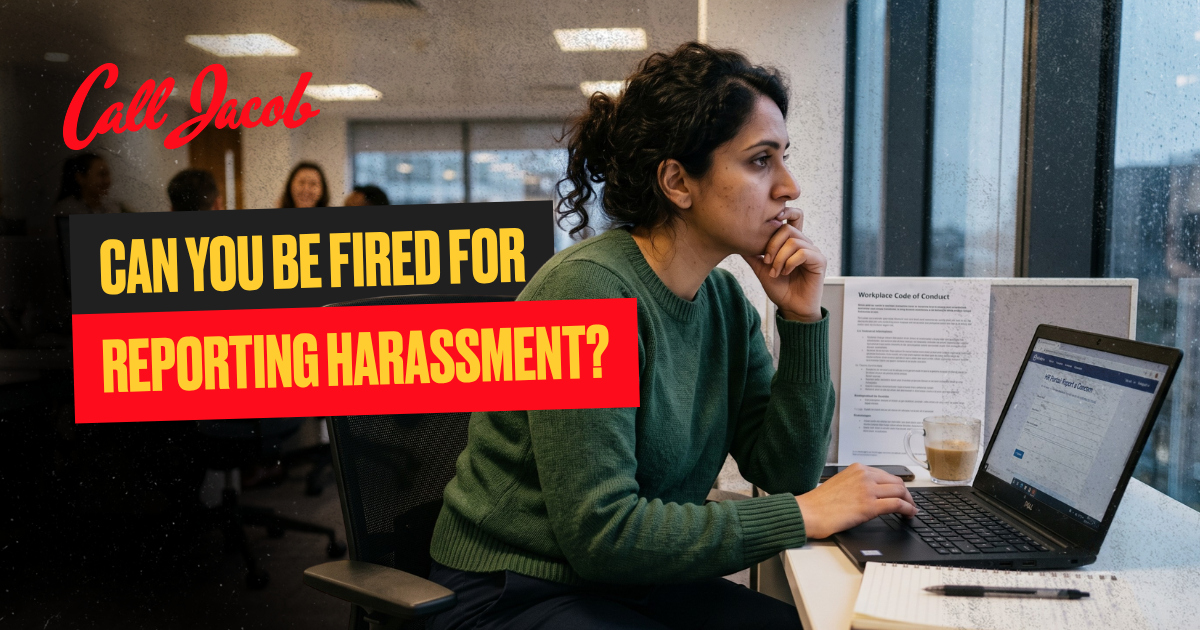
Wondering if you can be fired for reporting harassment? You’re not alone. While the exact number of workplace harassment incidents isn’t known because many cases go unreported, such incidents are unfortunately common.
Employees may fear reporting misconduct because they worry they will be treated unfairly. Thankfully, in California, we have higher workplace protections than federal law mandates. It is illegal for your employer to retaliate in any way if you report harassment. At the Law Offices of Jacob Emrani, our skilled team of lawyers knows the California legal system inside and out. Call us to schedule a meeting with an attorney, and we can evaluate your case.
Reporting Harassment in the Workplace
Harassment is any unwelcome conduct that creates a hostile, intimidating, or abusive environment. Common instances that create a hostile work environment include:
- Mistreatment based on a protected status, like race, sexual orientation, gender expression, disability, age, or religion.
- Sexual harassment, even in the form of jokes, or any intimidating or offensive images, and verbal or physical conduct.
- Intimidation or sabotage through rumors, threats, or social isolation.
- Mockery and disparaging remarks or offensive slurs.
- Criminal harassment, such as stalking, or using emails, texts, or social media to torment a coworker or employee.
To qualify as harassment, these behaviors must alter your working conditions to make it more difficult for you to do your job and be either severe or pervasive, with repeated instances that create a hostile environment.
When Retaliation Becomes Illegal
There are legal retaliation protections that stop your employer not only from firing you, but also from any form of retaliation. Illegal retaliation for reporting harassment may look like:
- Unfair demotions: Being moved to a worse shift, receiving a pay or hourly cut, or being assigned a worse role after reporting harassment may constitute retaliation.
- Refusal to promote: Being unfairly denied opportunities in the workplace in response to your asserting your rights.
- Unfounded disciplinary action: Unfair discipline or undeserved negative evaluations.
- Ostracism: Excluding you from meetings, job perks, or work-related activities and conversations, or generally creating hostile, exclusionary situations.
If you believe you’re a victim of workplace retaliation, the lawyers at the Law Offices of Jacob Emrani are here to evaluate your case. Sometimes, the actions themselves are not illegal, but the timing, hostility, or worsening of the workplace environment may be enough to constitute a retaliatory action. This is applicable not only to employers but also to coworkers.
Evidence to Preserve
According to the Civil Rights Department, the burden of proof is much lighter for employees than for employers. This means that if, within 90 days of reporting harassment, you are the victim of adverse actions, the law will presume it is retaliation, and it will be up to your employer to prove the actions are legitimate.
The basic criteria required to prove that you have been punished, fired, or otherwise disciplined for reporting harassment are:
- You did a legally protected activity. In this case, the activity in question would be reporting workplace harassment.
- You experienced an “adverse action”, or in other words, the actions against you caused work-related harm.
- This harm happened at least in part because of the workplace harassment report.
The more proof you have, the better. When you speak to the lawyers at the Law Offices of Jacob Emrani about wrongful termination in California, we may ask you the following questions:
- What protected status is the harassment based on?
- When did the retaliation start? Retaliation is easier to prove if the issues start within 90 days of the protected activity.
- Who is harassing you?
- How long has the problem been going on?
- Has anybody witnessed this behavior?
- Is it only you being treated unfairly, or are others as well?
- How did the harassment prevent you from performing your workplace duties?
- How did your employer respond when you reported the incidence(s)?
- Are there any possible reasons your employer could justify their actions against you?
Evidence you should keep includes any:
- Emails or written documents proving harassment.
- Any photo or video of the harassment that may exist.
- Witness details.
- Documentation of any injury or property damage.
- Documentation of all scheduling changes, pay cuts, demotions, etc.
- Any proof you have of prior good standing (attendance reports, promotions, performance reviews, etc.)
If possible, keep a written log with dates and the times the behavior occurs, and save your evidence on a personal device to ensure continued access.
Your Rights Under California Law
Harassment and discriminatory practices are prohibited in all workplaces of all sizes. Volunteers, interns, applicants, and contractors are all protected under the same anti-discrimination laws as paid employees. If your workplace has 5 or more employees, sexual harassment training must be provided.
If you feel threatened by others at work, this is harassment, and your employer cannot legally fire you for reporting it. In the workplace, everyone must comply with the state’s Fair Employment and Housing Act (FEHA), which makes it illegal for your employer to retaliate.
The California Labor Code Section 1102.5 provides whistleblower protections, stopping employers from firing you for disclosing violations of this, or any, law to:
- The government.
- Law enforcement.
- Any person with authority over the employer.
- Another employee with the authority to investigate or correct the behavior.
You have rights, and these laws have been created to protect you. Californians may have a reputation for being easygoing, but when it comes to employee protections, we are beyond serious.
When to Contact an Attorney
Contact an attorney at the first sign of any retaliatory behavior. A retaliation attorney will ensure you’re not pressured to sign unfair documents, and can prevent worsening issues and termination.
At The Law Offices of Jacob Emrani, our lawyers understand how stressful it can be to work in a hostile environment. It takes a toll on your mental and emotional health while making it more difficult to do your job. If you believe your employer has acted illegally, contact our team, and we will evaluate your case.
Call the Law Offices of Jacob Emrani
You deserve fair treatment, and your employer must comply with California and federal laws. If you believe your employer is retaliating after you’ve reported harassment in the workplace, or you need assistance after being illegally terminated, contact the Law Offices of Jacob Emrani.
You can speak with a qualified retaliation attorney about your unique workplace situation and your next steps. We are available now to ensure you are treated fairly, and we win cases.