





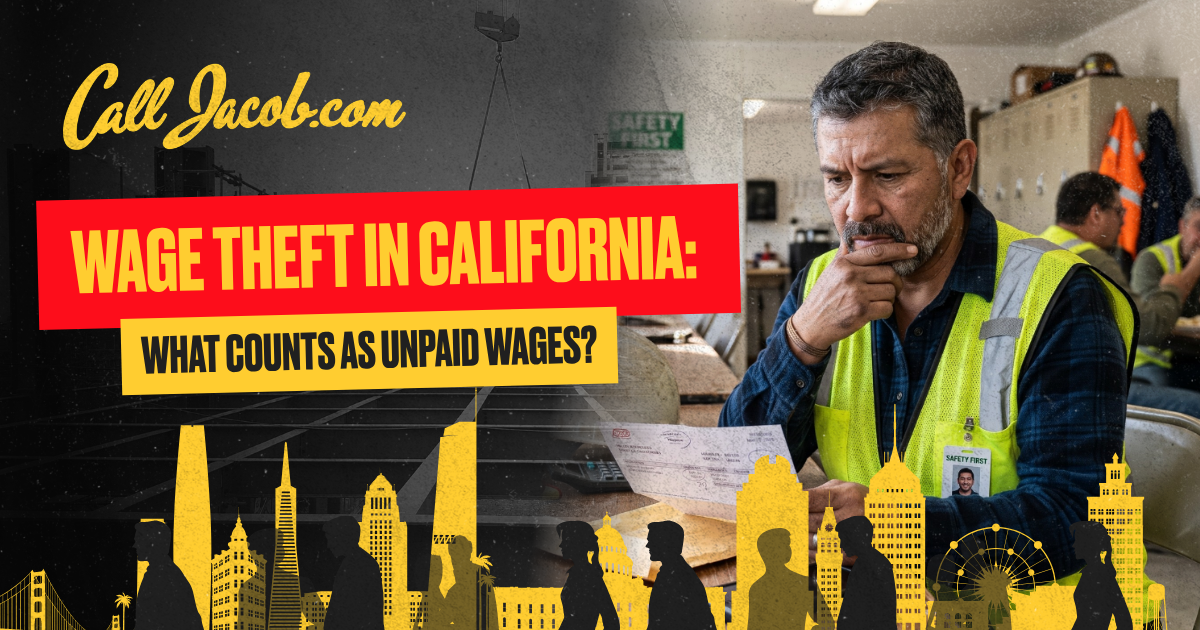
Over the course of the last century, Americans have earned hard-fought rights and protections when it comes to labor and wages. In California, there are specific protections in place to ensure employees receive their full wages. However, many people still aren’t aware of the ins and outs of wage theft as defined in California law. Learn what qualifies as unpaid wages, some common examples, and find out your legal options if you’ve been a victim of wage theft.
What Is Wage Theft?
Wage theft is the illegal withholding of wages or benefits from an employee by their employer. This can come in many forms, some of which may be less obvious to the average worker than others. In California, unpaid wages are illegal in any form, whether it’s regarding compensation earned, bonuses, commissions, or vacation pay.
Examples of Unpaid Wages
There are many examples of unpaid wages, some of which may be less intuitive than others. Despite protections being in place, many people still don’t know when their employer is illegally withholding wages. Examples of wage theft include the following.
Missed Breaks
Under California law, employers are required to provide meal and rest breaks to (non-exempt) employees. If your employer denies you these breaks or makes you work through them, you’re legally entitled to penalties of one hour of pay for each day you miss breaks.
If your employer regularly makes you work through breaks, pressures you to skip breaks, or denies them to you altogether, document each instance with dates and times. This can help you build a stronger case in the future with the help of a wage theft lawyer.
Failure to Pay Final Wages
If you quit or your employment is terminated, your employer is legally required to pay you all outstanding earned wages within 72 hours. Regardless of the circumstances of the end of your employment, you’re entitled to be paid the wages you worked for. If your employer fails to pay you the wages you earned within this timeframe, you could have a wage theft case.
Reporting Time Pay
If you show up to work as scheduled, only to be told you’re not needed, you’re entitled to be paid for at least half of your scheduled shift with a minimum of two hours. For example, if you show up for an eight-hour shift only to be sent home when you arrive, you’re legally entitled to four hours’ worth of wages.
Unpaid Overtime
One of the more common forms of wage theft is uncompensated overtime. If you’re made to work before or after your shift or through your breaks, you need to be paid for it. Your employer is required to pay you time-and-a-half or double time (depending on the number of overtime hours) for every hour worked over eight hours in a day or 40 hours in a week.
Illegal Deductions
A lesser-known form of wage theft is when your employer deducts money from your wages for unauthorized expenses, such as work uniforms, cash shortages, or broken equipment. Read up on common unlawful wage deductions to ensure your pay isn’t being stolen by your employer.
Tip Theft
Another form of unpaid wages is tip theft. In California, tips are exclusively reserved for employees, and your employer is never entitled to tips intended for employees. If your employer takes any portion of your tips, you may have a wage theft case against them.
California Wage Laws
A strong understanding of California’s labor and wage laws helps you know your rights and recognize if your employer is stealing your wages. Here are the key wage laws for employees to understand:
- California’s minimum wage is $16.90 per hour.
- Overtime must be compensated either 1.5 or two times their regular rate.
- Employees can only be exempted from overtime pay if they make more than double the state’s minimum wage ($70,304 per year in 2026).
- Employees must receive a 30-minute unpaid meal break if they work more than five hours, and it must be provided by the end of the fifth hour.
- Employees must receive a 10-minute rest break for every four hours worked.
- If an employee is fired, they must receive their final paycheck immediately.
- If an employee quits, they must receive their final paycheck within 72 hours.
Can You Sue Your Employer?
What can you do about wage theft? Your first option is to file a claim with the California Labor Commissioner’s Office. This typically results in a settlement conference between you and your employer. If the situation isn’t resolved in this conference, a hearing will be held, at which point a hearing officer will make a decision on the claim. This option is fast and free, but is best used for simpler cases with dollar amounts below $15,000.
If your situation is more complex, involves more money, or includes other elements, such as emotional distress, suing your employer with the help of a wage theft lawyer is the better option. The wage loss attorneys at The Law Offices of Jacob Emrani can help you fight for wages owed to you, as well as seek compensation for emotional distress or punitive damages.
Regardless of the option you choose, the statute of limitations for wage theft claims is three years. To improve your odds of a successful claim or lawsuit, gather as much documentation and evidence as possible to support your case.
Signs of Wage Violations
Despite being illegal, wage theft and other violations are surprisingly commonplace in California. Many employers prey upon employees who don’t fully understand their rights. To protect yourself, be on the lookout for these common signs of wage violations in the workplace:
- Your employer encourages or pressures you to work before clocking in or after clocking out.
- You aren’t paid overtime wages.
- Your paychecks are absent or late.
- Your employer doesn’t provide pay stubs.
- Uniforms, equipment, tools, or cash shortages are deducted from your pay.
- Your employer takes some or all of the tips intended for employees.
- Your employer misclassifies you as an independent contractor.
- Your employer doesn’t pay you your final paycheck within the specified time frame.
Fight for What You’re Owed
If any of these examples and warning signs of wage theft seem familiar, it’s time to take action. With help from a wage theft attorney at the Law Offices of Jacob Emrani, you can take real action against employers who are stealing wages from you. Whether you’re seeking an individual lawsuit or have the potential to be part of a class action lawsuit, our team is here to help you fight for what’s owed to you. For more information, contact us to schedule your consultation.