



California Lemon Law Attorneys
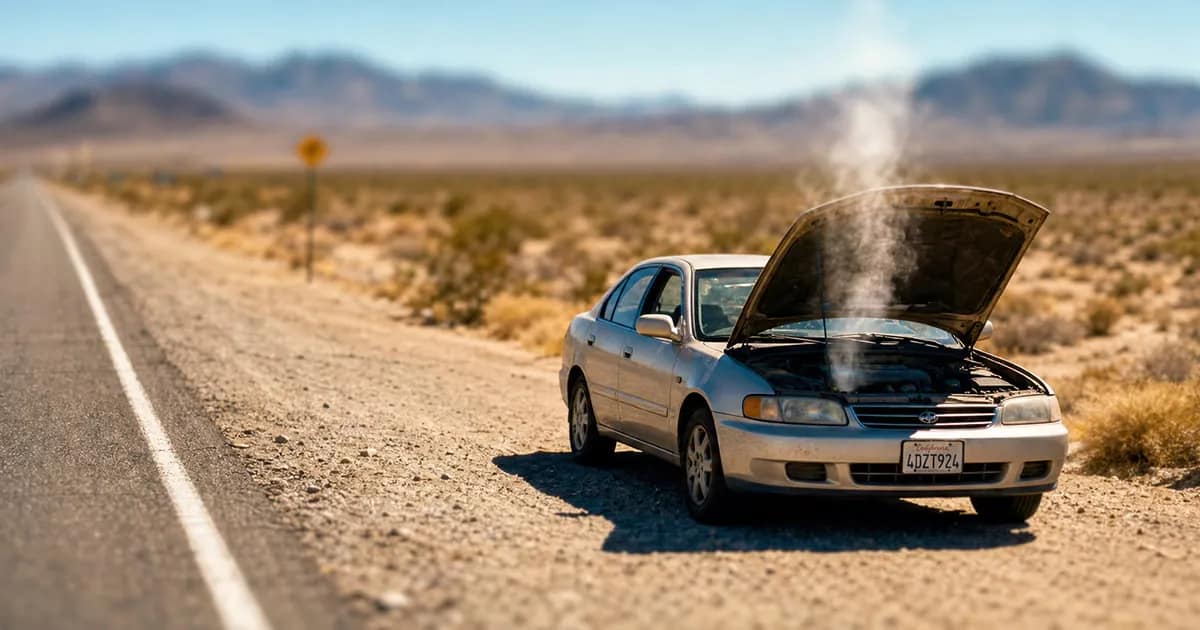
California Lemon Law attorneys see this kind of situation all the time. A vehicle keeps returning to the shop while the warranty clock keeps ticking. If your car, truck, or SUV has been back for the same problem more than once, you may have more leverage than you think under state law.
The Law Offices of Jacob Emrani can organize the repair history, identify the warranty-covered problems, and explain whether California Lemon Law may support a repurchase, replacement, or another negotiated resolution.
How California’s Lemon Law Protects Vehicle Owners
California’s Lemon Law is part of the Song-Beverly Consumer Warranty Act. California Civil Code section 1793.2 sets the main rule.
When a qualifying new motor vehicle cannot be repaired to conform to its applicable express warranties after a reasonable number of attempts, California law generally requires the manufacturer to promptly offer a replacement or restitution, with the buyer entitled to elect between those remedies. A qualifying defect, called a “nonconformity” in the statute, must substantially impair the vehicle’s use, value, or safety. California Lemon Law claims aren’t just about money. Certain defects can increase the risk of a car accident.
Does Your Vehicle Qualify Under California Lemon Law?
A vehicle may qualify under California’s Lemon Law when:
- It is a qualifying new motor vehicle purchased or leased mainly for personal, family, or household use.
- It has a warranty-covered nonconformity that substantially impairs its use, value, or safety.
- The manufacturer has been given a reasonable opportunity to repair it.
Certain business-use vehicles may qualify as well, including vehicles with a gross vehicle weight rating under 10,000 pounds used by a business that has five or fewer vehicles registered in California, subject to the statute’s other requirements. Demonstrators and certain dealer-owned vehicles sold with a manufacturer’s new-car warranty may also qualify.
A defect does not have to be dramatic or widely reported to matter under California’s Lemon Law. Problems caused by abuse, neglect, or unauthorized modifications may fall outside Lemon Law warranty coverage or complicate a claim, particularly when they caused or contributed to the alleged defect. The vehicle’s condition, warranty terms, and repair records are all relevant.
How Many Repair Attempts Are Required Under California Lemon Law?
There is no single number for every case. Instead, the number of California Lemon Law repair attempts that matters depends on the type of defect involved.
- Two or more attempts to repair a nonconformity that may cause death or serious bodily injury.
- Four or more attempts for the same substantial defect.
- More than 30 cumulative days out of service.
These are presumption standards, not universal minimums for every Lemon Law claim. That’s part of why a Lemon Law lawyer in California builds a timeline instead of just counting visits on a spreadsheet.
Understanding California’s 18-Month or 18,000-Mile Lemon Law Presumption
The Lemon Law rule in California creates a rebuttable presumption, not an automatic win. Civil Code section 1793.22 creates a rebuttable presumption when a problem arises within 18 months after delivery or within the first 18,000 miles, whichever comes first.
The presumption may apply when one of these benchmarks is met.
- The manufacturer or its agents tried at least twice to repair the same defect that is likely to cause death or serious bodily injury, but the defect remains.
- The manufacturer or its agents tried at least four times to repair the same defect, but the defect remains.
- Warranty repairs kept the vehicle out of service for more than 30 cumulative calendar days.
Direct notice to the manufacturer may also be required for the two- or four-attempt benchmarks if the warranty or owner’s manual clearly disclosed that requirement. The presumption shifts part of the burden of proof, but it is not the only way to establish a claim. A vehicle can still qualify outside the first 18 months or 18,000 miles when the complete evidence shows that the manufacturer had a reasonable opportunity to repair a substantial warranty defect.
How long you have to file a California Lemon Law claim depends on the applicable statute of limitations, the warranty terms, the vehicle’s delivery date, and the facts of the case. California’s newer Lemon Law limitations provisions establish specific deadlines for certain covered actions, including a general one-year period after the applicable express warranty expires and an outside limit of six years after the vehicle’s original delivery date.
Common Vehicle Defects That Can Lead to a Lemon Law Claim
The name of the failed part is less important than the evidence showing what the vehicle did, how often it happened, and whether the repair attempts solved it. The following are examples of vehicle defects that may lead to a California Lemon Law refund or replacement claim.
Engine and transmission problems
Stalling, loss of power, overheating, and rough or delayed shifting are examples of vehicle problems that may support a Lemon Law claim in California.
Brake and steering defects
Soft brake pedals, delayed stopping power, and steering that pulls or locks up may indicate safety-related defects.
Electrical and software problems
Repeated warning lights, glitchy infotainment systems, and software updates that don’t fully resolve a problem often leave a paper trail that’s easy to underestimate until someone lines up every repair order side by side.
EV battery and charging issues
Electric vehicle issues such as premature battery problems, failed or inconsistent charging, and certain range-related performance concerns may warrant review. They’re evaluated under the same use, value, safety, Lemon Law warranty, and reasonable-repair-opportunity standards.
Airbag and safety-system defects
Airbag or seatbelt system failures and certain driver-assistance malfunctions may involve serious safety concerns and warrant prompt documentation and legal review.
Water leaks and climate-control problems
Persistent water leaks, musty odors, and significant climate-control failures can be especially disruptive during Southern California’s hot summers.
What Compensation Can You Receive From a California Lemon Law Claim?
You can get a California Lemon Law refund. The statute calls this restitution, which is calculated under statutory rules rather than based simply on the vehicle’s current market value. Depending on the circumstances, statutory restitution may include:
- Amounts paid or payable for the vehicle.
- Applicable manufacturer-installed options.
- Taxes, registration and license fees.
- Certain incidental costs, such as reasonable towing or rental-car expenses related to the defect.
The manufacturer may claim a mileage offset for use before the first repair visit for the defect that led to the claim. The statute calculates that offset by multiplying the vehicle’s actual price by the miles driven before that first repair presentation, divided by 120,000. Pinning down the correct first repair date can shift that number meaningfully, which is one reason a defective vehicle attorney reviews every repair order rather than taking a summary at face value.
Under Civil Code section 1794, a court may award a civil penalty of up to twice the actual damages when a buyer proves a willful violation. A prevailing buyer may also recover reasonably incurred costs and attorney’s fees. Neither result is automatic.
How Does a California Lemon Law Buyback Work?
You can choose a refund instead of a replacement vehicle. A Lemon Law buyback in California generally involves the manufacturer taking back the defective vehicle and providing the statutory restitution amount, subject to applicable deductions and adjustments. When the statutory replacement-or-restitution remedy applies, the buyer may elect restitution rather than accept a replacement vehicle.
A California Lemon Law replacement vehicle generally must be a substantially identical new vehicle, with the same warranties that normally accompany that model, subject to the requirements of Civil Code section 1793.2. A manufacturer may also offer a negotiated “cash-and-keep” settlement, allowing the owner to keep the vehicle in exchange for a payment. Get a lemon car lawyer to compare the offer with the remedies and calculations that may apply before signing a deal.
Does California Lemon Law Cover Used Vehicles?
The Lemon Law for used cars in California can apply, but only under specific circumstances. The California Attorney General states that the Lemon Law applies to used vehicles for which a manufacturer’s new-car warranty is issued with the sale. A dealer warranty or service contract may create different rights and obligations. A certified pre-owned designation alone does not automatically establish California Lemon Law replacement coverage.
Motorcycles are excluded from the “new motor vehicle” definition in section 1793.22, although other warranty laws may still provide remedies.
What Evidence Should You Save for a Lemon Law Claim?
Before reaching out for a case review, gather the paperwork that tells the story without relying on memory. A well-documented file makes it faster to identify which repair attempts count, how long the vehicle was out of service, and which legal standards may apply.
- Purchase or lease agreement: Include financing, add-ons, and any prior-vehicle negative equity.
- Warranty booklet and owner’s manual: Save the version delivered with the vehicle.
- Every repair order: Check the complaint, dates, mileage, days out of service, and work performed.
- Dealer and manufacturer communications: Keep emails, texts, case numbers, letters, and call notes.
- Current financial records: Gather registration, payment history, and an estimated payoff amount.
- Out-of-pocket losses: Save towing, rental, transportation, and related repair receipts.
- Evidence of intermittent defects: Preserve videos, photos, warning messages, and a dated symptom log.
Continue making required vehicle and insurance payments unless a qualified professional advises otherwise. Also get advice before trading in or selling the vehicle because current law may require possession or specific notice before certain remedies are pursued.
How Can a California Lemon Law Attorney Help?
A California Lemon Law attorney builds a repair timeline instead of counting visits in isolation. We compare repeated complaints, diagnostic codes, parts, software updates, mileage, and days out of service. We also identify the applicable warranty, the first repair presentation tied to the defect, and any direct notice already sent to the manufacturer.
Next, we explain which legal route the records may support and what additional proof would help. If the matter moves forward, we can prepare the required notice and a documented demand. We can also communicate with the manufacturer and compare any offer with the statutory calculation.
Lemon Law claims are one of several practice areas our office handles for Southern California clients dealing with a defective purchase or an injury on the road.
Why Choose The Law Offices of Jacob Emrani for Your Lemon Law Claim?
Our California Lemon Law firm works with vehicle owners across Southern California, from daily commuters piling up freeway miles on the 405 to families who bought a new car, expecting years of reliable use. A defect that seems minor on paper, such as a recurring warning light, can become a serious concern when it affects a vehicle’s reliability or safety in busy L.A. traffic.
We compare repair visits, identify complaints that may describe the same defect in different words, and assess whether the manufacturer had a reasonable opportunity to repair the problem. Whether your car has been in the shop repeatedly for a potentially serious safety-related defect or another recurring problem, our team reviews the timeline and explains what California law may support.
Find Out If Your Vehicle Qualifies for a Lemon Law Claim
If warranty repairs have not resolved a substantial defect, gather the purchase or lease agreement and every repair order. Contact the Law Offices of Jacob Emrani for a free review of the timeline, warranty, notice history, and possible next steps.
What Our Clients Say

"Wendy was extremely helpful at the end of my process when getting my funds! This was a very long process but in the end it was worth the wait and time! Ny advice be patient and let them work. Thank you for your work"

"I was in a hit and run that left my car totalled and me with injuries. I seeked assistance from Jacob Emrani and his team. I was assigned to Jennifer Cordova who was attentive, explanatory and communicative. I was lucky to have been represented with authority, tenacity and care. When unpleasant situations like these happen, call Jacob."
"Their are no words but to say thank you God. This staff was so caring and helpful even on a Sunday my attorney was be on caring send all papers email asap. Knowing I had chosen a wrong attorney group to help me this law frim step in in 2 hours they had more done then 4mos I was told it was being taking care of thank you lord and are friend who, sent us to them we knew something was wrong I will highly recommend this firm the nice staff caring. even called to let us no we are in the best hands wow that is truly a man of God thank you thank you Christina Williams Corona calif"
Injured? Talk to Jacob 24/7
Get Your Free Consultation




We get results for our clients
$6,000,000
Auto Accident
An auto accident is a collision between two or more vehicles on the road, which can result in property damage, personal injury, or death.
$4,000,000
Truck Accident
A truck accident refers to an incident involving a large commercial truck or 18-wheeler, which can result in significant damage and serious injuries.
$2,000,000
Pedestrian Accident
A pedestrian accident is an incident where a person walking on foot is hit by a vehicle, which can result in serious injuries or death.
$1,500,000
Medical Malpractice
Medical malpractice refers to a failure by a medical professional to follow accepted standards of care, which can result in harm to a patient.